





Jeebly | Logistics Solutions

Dubai Address Format: How to Write a UAE Address for Deliveries

How to Write a Dubai Address: Format, PO Box & Examples (2026)

Dubai addresses don’t use ZIP or postal codes. A complete Dubai address includes the recipient’s name, building or villa details, area, and Dubai, UAE. Adding a phone number and landmark helps ensure faster delivery

Dubai address format 
Full Name
Apartment / Villa / Office Number
Building Name
Street Name
Area / Community
PO Box (if applicable)
Dubai, UAE
Mobile Number
Nearby Landmark

This guide covers the UAE address format from a logistics standpoint. Understand how the system works, what each component does in the delivery chain, and where most mistakes happen.

Why the UAE Address System Is Different

The UAE has no national postal code system. There’s no five-digit code that narrows a destination to a specific area. Instead, deliveries are routed using a combination of emirate designation, area name, building identification, and P.O. Box number.

This structure emerged from the speed of the country’s urban development. 
* New towers, communities, and commercial zones were built faster than street-naming infrastructure could keep pace. 
* Emirates Post introduced the P.O. Box system as a stable identifier in that environment, and the entire logistics network was built around it.

Delivery services have built their routing and sorting operations around this framework. When you understand how the system works, it becomes straightforward. When you ignore it, deliveries fail.

Key Components That Route a Package Correctly

Each element of a UAE address performs a specific function in the delivery chain. Leave one out, and the package stalls somewhere in that chain.
1. Recipient name or business name
Full name, matching official identification. For businesses, include the department and an “Attention:” line. A generic business name only means reception staff may delay or refuse handover.
2. Building name and unit number 
Use the exact name as it appears on signage. “Bay Square” and “Bay Square Building 6” are different units in the same complex. Missing a unit number in a high-rise means the package stops at the reception desk.
3. Street or road name 
It is the nearest main road that appears on standard mapping apps. Internal community roads often don’t resolve in GPS routing software. If in doubt, use the closest arterial road.
4. Area or district 
This is where most mistakes happen. “Dubai” is not an area. “Jumeirah” and “Jumeirah Village Circle” are two completely different delivery zones. Use the full, official name as it appears in Emirates Post and courier databases. This field determines last-mile dispatch routing.
5. Emirate 
It’s the first routing decision made at any sorting facility. Write it in full: Abu Dhabi, Dubai, Sharjah, Ajman, Ras Al Khaimah, Fujairah, or Umm Al Quwain. Never abbreviate, never assume it’s implied.
6. P.O. Box number 
This format is: P.O. Box [number], [Emirate]. This is the primary identifier used by the postal system. Without it, routing depends entirely on physical address matching, which is inconsistent in newer developments.
7. Country 
Use “United Arab Emirates” for all international shipments. Domestic airway bills can omit it, but include it for any cross-border order.

Common Address Templates by Scenario

Getting that sequence right and ensuring each layer is specific is what turns an address from a vague location into an actionable delivery instruction.
Here are some situation-based formats that can be used:

1) Residential — Apartment

Ahmed Al Mansouri
Apartment 804, Marina Gate Tower 1
Al Marsa Street, Dubai Marina
P.O. Box 73210, Dubai
United Arab Emirates

2) Residential — Villa Community

Sarah Thompson
Villa 27, Springs 3
Al Thanyah, Dubai
P.O. Box 49321, Dubai
United Arab Emirates

3) Business — Commercial Office


Procurement Department
Attention: Rania Khalid
Office 1102, One Business Bay
Business Bay, Dubai
P.O. Box 55678, Dubai
United Arab Emirates

4) Free Zone: Include the full zone name. Confirm gate pass or access requirements with the recipient before shipping. Many free zones won’t accept deliveries without prior arrangement.

Al Fardan Trading LLC
Warehouse 18, Block A
Jebel Ali Free Zone (JAFZA)
P.O. Box 17000, Dubai
United Arab Emirates


The Mistakes That Create Most Failed Deliveries

Correctly formatted addresses achieve at least an 88% first-attempt delivery success rate. Incorrectly formatted addresses drop to 67%

This gap is almost entirely explained by the following preventable errors.

* Vague area name. “Dubai” or “Abu Dhabi” gets a package to a sorting facility, but it tells the driver nothing. Area-level specificity enables efficient last-mile dispatch.
* No P.O. Box. Matching physical addresses alone is unreliable in newer developments. Include the P.O. Box.
* Outdated location names. Community names change, and area designations get updated. A name that no longer exists in courier routing databases triggers manual intervention, which adds time and error.
* Missing contact number. A phone number on the air waybill (AWB) lets a driver resolve address ambiguity in real time. Without it, a failed attempt is almost guaranteed when anything is unclear.
* Incorrect unit number. In a building with 400 apartments, a unit number is required for the package to move past reception.

Running into repeated failed deliveries despite a correct address? It often points to a broader last-mile setup issue. Have a quick read on how small businesses can reduce failed deliveries in the UAE.

Addressing International E-Commerce Platforms

International platforms are designed around postal codes. The UAE doesn’t have it. This creates a formatting problem that most shoppers handle badly.

When a postal code field is mandatory, enter “00000” as a placeholder. Don’t compress address details into that field and leave others blank.

Use the fields this way:

* Address Line 1: Street and area
* Address Line 2: Building name and unit number
* City/State: Emirate
* Country: United Arab Emirates

For Noon, Amazon UAE, and other regional platforms, dedicated emirate and area fields are available. Use them fully. These directly determine eligibility for same-day and next-day delivery.

One consistent point across all platforms: include your mobile number on every shipment. In new developments, gated communities, and areas that don’t resolve cleanly on GPS, a driver who can call you makes a big difference between a delivery and a failed attempt.

How the Jeebly One App Handles Address Entry

Manual address entry is where most data quality problems start. The Jeebly One app, Jeebly’s native app that replaced the earlier web-based Jeebly NoW, addresses this directly by allowing users to drop a pin on a map rather than relying entirely on typed input.

A pin plus the building name and unit number gives drivers more reliable delivery data than a text address alone, especially in newer developments where road naming hasn’t yet caught up with mapping systems. 

The app generates the address from the location pin, reducing manual entry errors that cause a disproportionate share of failed deliveries.

Book a delivery on the Jeebly One app.

Conclusion

Every failed delivery generates a real cost. The rider has made the trip, COD hasn’t been collected, and a re-delivery attempt now consumes capacity that could have handled a new order.

With an 8-10% first-attempt failure rate and additional logistics costs, the number adds up quickly before accounting for the customer service load and retention impact.

Address quality sits at the front of that problem. Businesses that standardise address capture at checkout close a significant portion of that gap without changing their delivery operations.

See how Jeebly Bizz handles end-to-end fulfilment for businesses!

Frequently Asked Questions

A Dubai address usually includes the recipient’s full name, mobile number, building or villa name/number, street or area name, city (Dubai), and UAE. Since many locations are identified by area and landmark, adding a nearby landmark can help drivers find the address faster.

Example:
Ahmed Khan
+971 XX XXX XXXX
Building 12, Apartment 304
Jumeirah Lake Towers, Cluster X
Near DMCC Metro Station
Dubai, UAE

Dubai does not use postal or ZIP codes like many other countries. If a website asks for one, people in the UAE often enter 00000 or leave it blank if allowed. For courier deliveries, the full address, mobile number, and landmark are usually more important.

For courier deliveries, include as much location detail as possible:

  • Full name
  • Mobile number
  • Building or villa name/number
  • Apartment or office number
  • Area/community name
  • Nearby landmark
  • City (Dubai)
  • UAE

The more detailed the address, the easier and faster delivery becomes.


A PO Box (Post Office Box) is a secure mailbox at Emirates Post used to receive mail. Businesses in Dubai often have a PO Box number for official mail and documents.

Example:
PO Box 12345
Dubai, UAE

For most courier deliveries, a physical address plus contact number is preferred over only a PO Box.

Write the address clearly in this format:

Recipient Name
Mobile Number
Apartment/Villa/Office Number
Building Name / Street
Area / Community
Nearby Landmark
Dubai, UAE

Example:
Sarah Ali
+971 XX XXX XXXX
Villa 18
Al Barsha 2
Near Mall of the Emirates
Dubai, UAE

Routes to insightful reads

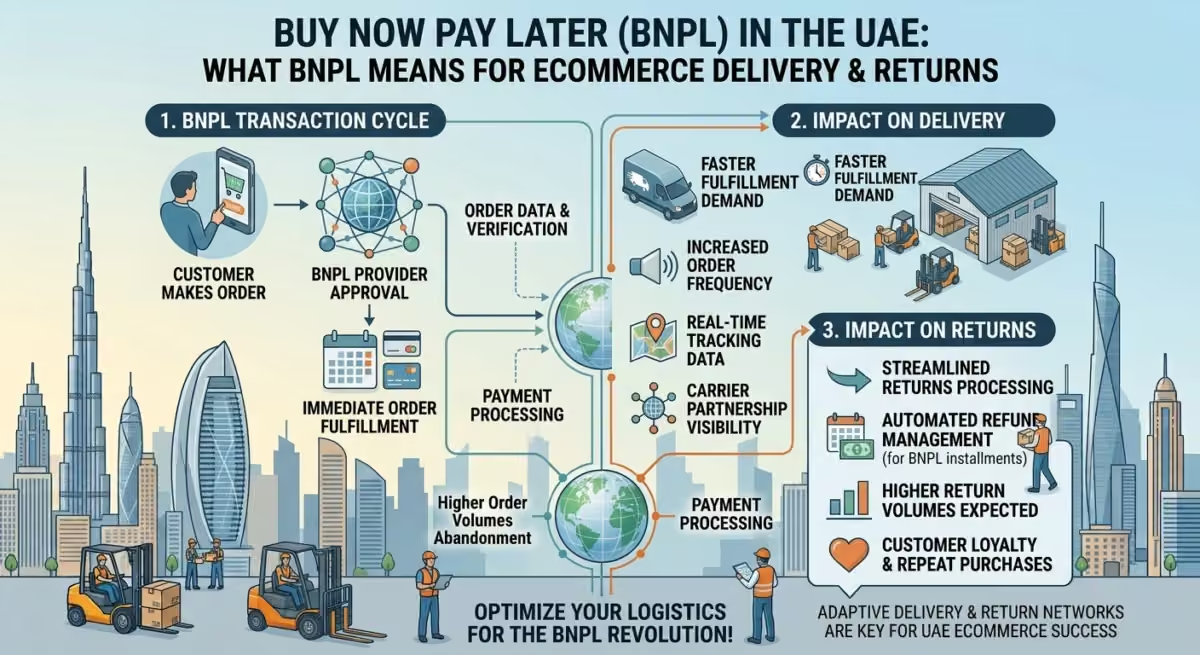
BNPL in the UAE and its impact on ecommerce delivery and returns, showing the transaction cycle, faster fulfilment, order frequency, real-time tracking, and streamlined returns
Buy Now Pay Later in the UAE: What BNPL Means for eCommerce Delivery and Returns.

Buy Now Pay Later (BNPL) is changing how consumers shop and how eCommerce businesses manage fulfilment and returns in the UAE. This guide explores how BNPL can influence order volumes, delivery demand, fulfilment operations, return rates, refund processing, and the logistics strategies businesses need to support a growing BNPL-driven customer base.

Read More
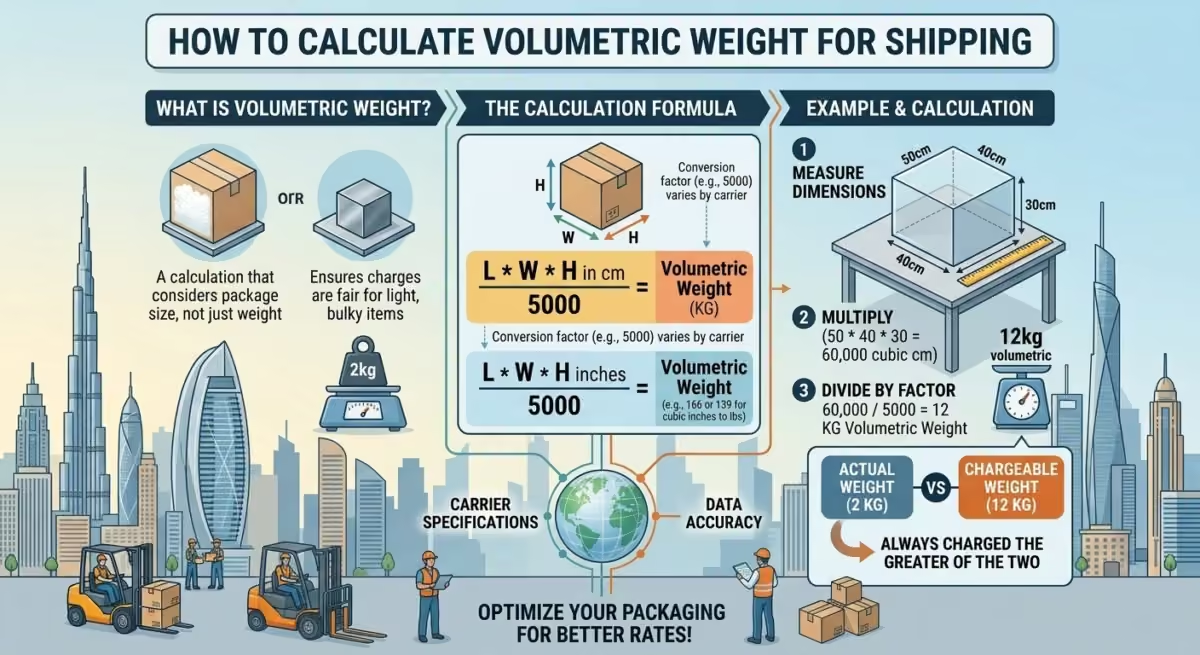
Infographic explaining how to calculate volumetric weight for shipping, including the formula, measurement example and comparison between actual and chargeable weight.
How to Calculate Volumetric Weight for Shipping: Formula and Examples

Learn how to calculate volumetric weight for shipping with an easy-to-follow formula and practical examples. Understand how package dimensions, actual weight and carrier conversion factors determine the chargeable weight and ultimately impact your shipping costs.
Read More
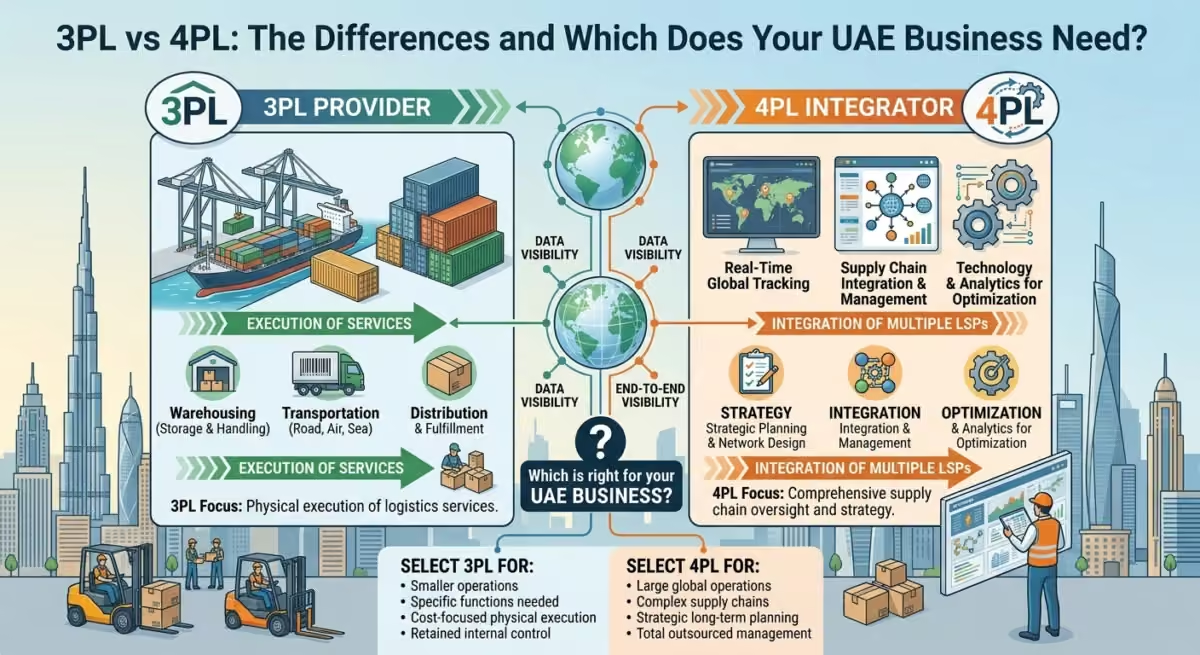
3PL vs 4PL logistics comparison showing warehousing, transportation, distribution, supply chain integration, technology, analytics, and strategic planning for UAE businesses
3PL vs 4PL: What Is the Difference and Which Does Your UAE Business Need?

3PL and 4PL logistics models help businesses manage different levels of supply chain operations. This guide explains the key differences between 3PL and 4PL providers, their roles, benefits, costs, and how UAE businesses can choose the right logistics model based on their size, supply chain complexity, and operational needs.
Read More
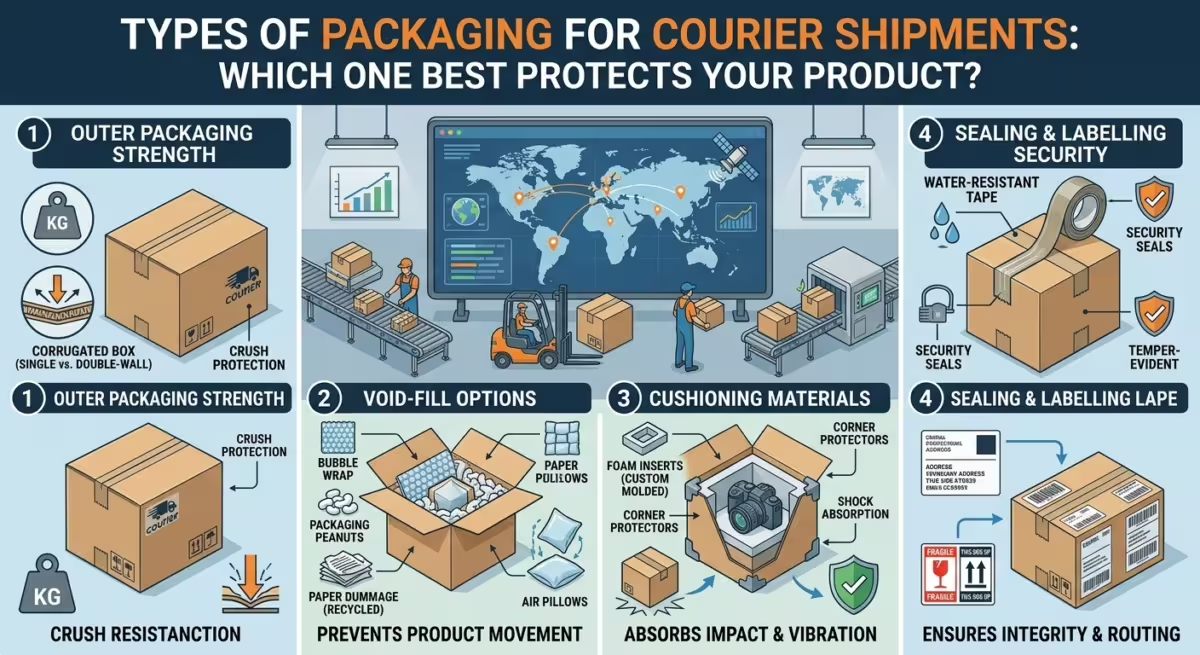
Types of packaging for courier shipments, showing outer packaging strength, void-fill options, cushioning materials, and sealing and labelling methods
Types of Packaging for Courier Shipments: Which One Best Protects Your Product?

Choosing the right packaging is essential for protecting products during courier transportation. This guide explores different types of packaging for courier shipments, including corrugated boxes, bubble wrap, air pillows, paper fillers, foam inserts, and protective seals, and explains how to choose the best option based on your product, handling needs, and shipping conditions.
Read More
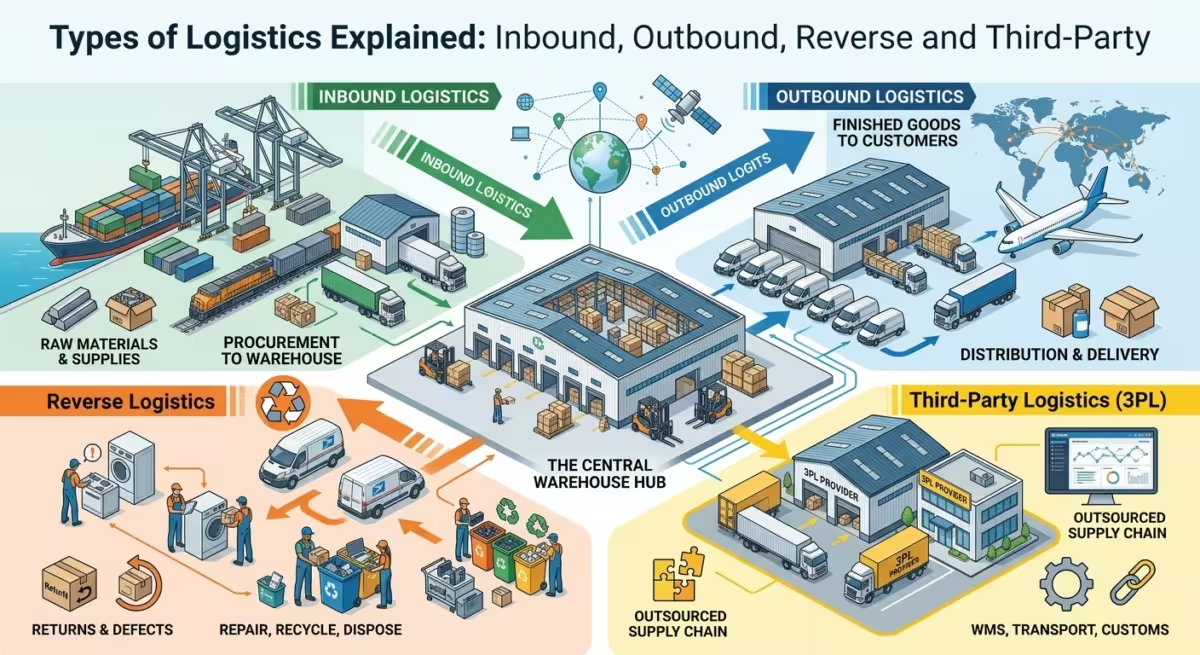
Types of logistics explained through inbound, outbound, reverse and third-party logistics, showing the movement of goods between suppliers, warehouses, customers and return facilities.
Types of Logistics Explained: Inbound, Outbound, Reverse and Third-Party 

Logistics covers much more than moving goods from one place to another. This guide explains the four key types of logistics, inbound, outbound, reverse and third-party logistics (3PL), and how each supports the supply chain. Learn how goods move from suppliers to warehouses, reach customers, return for repair or disposal, and how businesses use 3PL providers to manage logistics operations.

Read More

    Powered by